
Taxi or train in the Netherlands?
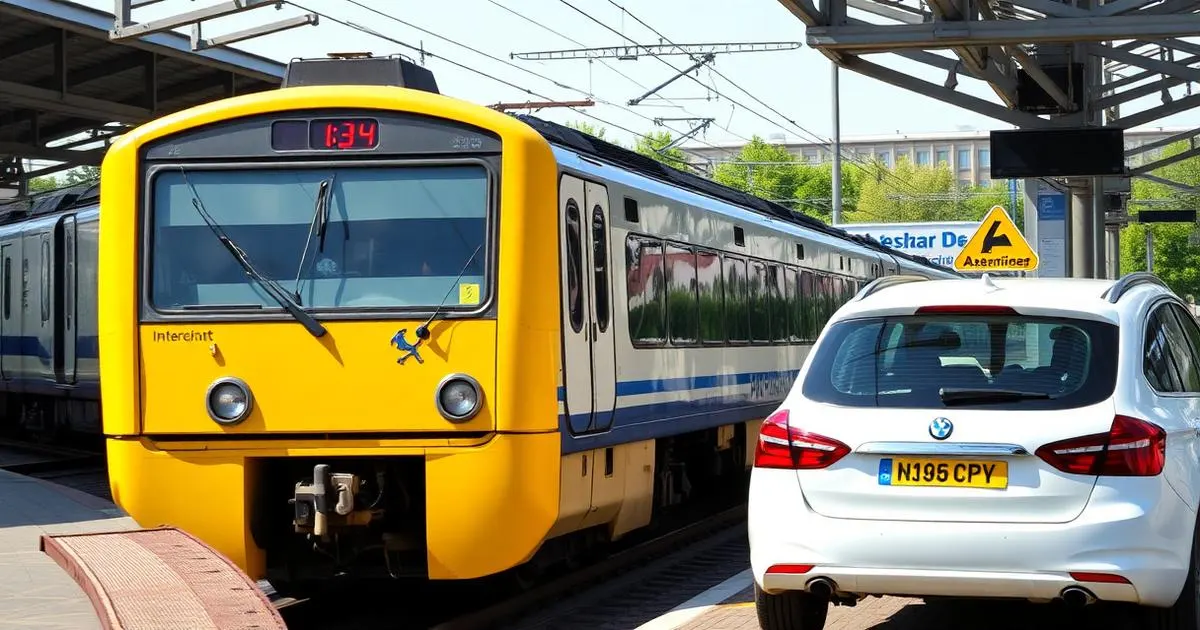
Dutch trains are fast and frequent, so for a single traveller going from one city centre to another they are hard to beat. The picture changes as soon as you add suitcases, early departures, children or a second and third passenger. The honest answer is that neither option always wins. Below you will find the situations where each one comes out ahead, so you can decide in a minute rather than guessing.
When the train wins
- You travel alone with hand luggage only.
- Both your start and end point are within walking distance of a station.
- You travel during the day on a busy corridor such as Amsterdam–Rotterdam.
- You want to work or read on the way.
- You are flexible about the exact arrival time.
When a taxi wins
- You travel with two or more people; the taxi price is per car, not per person.
- You have large suitcases, a buggy, sports gear or a musical instrument.
- Your departure or arrival falls outside the hours local buses run.
- Your address is not near a station, so you would need two transfers.
- You need to be somewhere at a fixed time, such as check-in for a flight.
- You travel with small children or with reduced mobility.
Comparing cost realistically
Compare the total journey, not just the ticket. A train trip often includes a bus or tram at each end, a transfer with luggage, and sometimes a taxi for the last kilometres anyway. Split between three or four passengers, a fixed-price taxi frequently lands close to the combined cost of separate tickets — while getting everyone door to door in one go.
Because our price is agreed in advance, you can put the two options side by side before you commit: check your taxi price, then compare it with the tickets you would need.
How booking a taxi with Taxiritje.nl works
Prices are based on the actual road distance in kilometres between your pickup address and your destination, so you always know the amount before you book. Payment is online by card or iDEAL, and you receive a confirmation by email with the driver details, the pickup time and an invoice with VAT for business trips.
You book online in a few steps. Enter your pickup address with house number and postcode, add your destination and choose the date and time. The price you see is the price you pay: it already includes luggage, tolls, parking at the airport and waiting time, so there is no meter running during the journey and no surcharge at night or at the weekend.
Reservations are possible up to three hours before pickup, and you can book a one-way trip or a return in the same booking. For flights you enter your flight number; we then follow the actual landing time and include up to 80 minutes of free waiting time at the airport. For a pickup at a home or hotel address we include 15 minutes.
- Fixed price per journey, confirmed by email before the driver is assigned.
- Sedan or estate car for 1-4 passengers, minibus for 5-8 passengers.
- Extra stops along the way can be added while booking.
- Changes and cancellations online up to 24 hours before pickup; call 085 060 7086 within 24 hours.
Frequently asked questions
Is a taxi ever cheaper than the train in the Netherlands?
Can I combine both?
What if my train is delayed?
Read more and arrange your trip
About the author
Taxiritje.nl editorial team · Planning and customer service
The editorial team consists of staff from planning and customer service at Taxiritje.nl. They write based on the rides scheduled every day and the questions customers ask about departure times, luggage, prices and bookings.
Related articles
- How much does a taxi to Schiphol cost from South Holland? — Compare your options
- Is a taxi cheaper if you travel with multiple passengers? — Compare your options
- Is a Fixed Taxi Price Better Than a Taximeter? — Compare your options
Book a taxi at a fixed price
Choose your route, see the price straight away and complete your booking online.